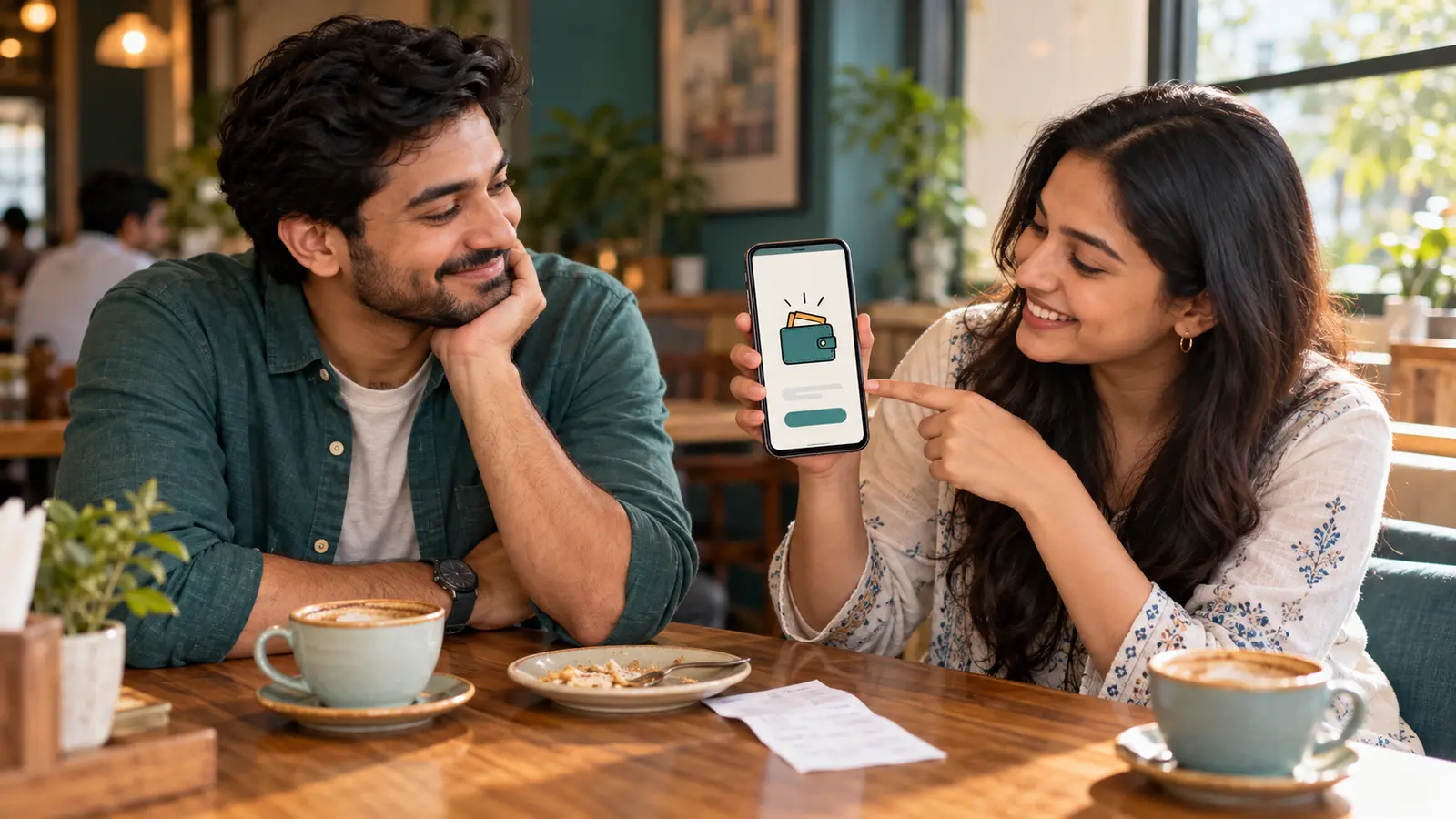
Cover: AI-generated editorial illustration. It depicts a suggested friendly reminder scenario, not a documentary photograph, bank screen or screenshot of a payment app.
You paid for dinner, tickets or a shared cab, and a friend has not returned their part. The awkward part is usually not the amount; it is choosing a reminder that is clear without sounding hostile.
KuchhBhi’s Udhaari Vasool tool creates a downloadable PNG reminder from a name, rupee amount, short reason and one of three styles. It does not send a message, move money, create a UPI collect request or prove that a debt exists. Treat the result as conversation support, not enforcement.
First, check that the amount is actually agreed
Before making a card, reopen the bill or expense split. Confirm what you paid, what the other person already paid, and whether tips, delivery charges or cancellations changed the total. If the amount is disputed, send the calculation in plain text first. A funny card cannot repair an incorrect number.
Use the tool only when the recipient already knows about the expense. Do not use it to surprise someone with a charge, publicly shame them, impersonate a business, or create something that looks like a legal notice.
Choose professional, funny or dramatic. If you are unsure, use professional.
Read every line in the preview. If a joke could embarrass the person, change the style or send a normal message instead.
Select Download Reminder PNG. The tool creates an image; you decide whether and where to share it.
Worked example: split dinner for four
Imagine four friends share a ₹2,400 dinner bill. You pay the full amount, so each person’s equal share is ₹600. Two friends pay immediately; one says they will pay later.
A clear input would be:
Name: Rohan
Amount: 600
Reason: Dinner split — 10 October
Style: Professional
Send the card privately with context: “Hey Rohan, sharing this so the dinner split does not get lost. Your share was ₹600. Please check the amount before paying.” This wording gives the person a chance to correct a mistake and does not pretend that the card itself is a payment request.
Choose the tone for the relationship
Professional
Use this for colleagues, new flatmates, clients or anyone who may not welcome teasing. Keep the reason factual and avoid jokes about their income or character.
Funny
Use it only with a friend who already enjoys that style of communication. A joke should reduce tension, not pressure the person through embarrassment.
Dramatic
This is deliberately exaggerated. Review the entire preview and avoid it where there is conflict, a power imbalance or genuine financial hardship.
Pair the image with a useful payment route
The generated PNG contains no bank transfer. If both people agree on the amount, share your usual verified UPI ID or payment link separately. Ask the payer to confirm the recipient name inside their UPI app before authorising anything.
NPCI explains that a UPI PIN authorises a transaction and should never be shared. Receiving a reminder card does not require the payer to disclose a PIN, OTP, debit-card detail or screen-sharing access. If a message asks for any of those, stop and verify through a known contact route.
What the tool cannot do
It cannot verify that money is owed or that the amount is correct.
It does not send a UPI request, collect money or confirm payment.
It is not an invoice, receipt, contract, legal demand or evidence of debt.
It cannot judge whether humour is appropriate for the recipient.
It does not replace a written expense breakdown when there is a disagreement.
The downloaded image may remain in your device gallery or backups; avoid entering sensitive details.
A better escalation path than repeated jokes
Send one clear private reminder with the amount and reason.
If there is no response, ask whether the amount or timing is a problem.
Agree on a realistic date or partial repayment if both sides want that.
For a substantial or disputed sum, stop sending novelty cards and keep factual records. Consider appropriate professional advice rather than threats or public posts.
Frequently asked questions
Does Udhaari Vasool send the reminder automatically?
No. It downloads a PNG. Sharing it through WhatsApp or another service is a separate action you control.
Can the card collect a UPI payment?
No. It does not create a transfer or collect request. Use a trusted UPI app separately, verify the recipient and never share a UPI PIN.
Is it a legally valid invoice?
No. The page describes it as a playful reminder, not an invoice, legal notice or proof that someone owes money.
Which style should I choose?
Use professional when uncertain. Funny or dramatic styles only make sense when the recipient welcomes that tone.
What details should I avoid?
Do not add account numbers, card details, UPI PINs, OTPs, addresses or identity-document numbers. A name, agreed amount and short expense reason are enough.
The reminder wording, worked example and escalation sequence are KuchhBhi editorial suggestions. They are not evidence that a debt exists and are not legal or financial advice.